--rm : Automatically removes the container once you exit (keeps your system clean).
To actually use Modulus, you need to launch the container with GPU support enabled. Use the --gpus all flag to give the container access to your hardware.
This guide will walk you through how to , set up your environment, and get your first simulation running. Prerequisites download the modulus docker container
Downloading the Modulus Docker container is preferred over a manual pip installation for several reasons:
Most Modulus images are hosted on the NVIDIA GPU Cloud (NGC). Step 1: Log In to the NVIDIA Container Registry --rm : Automatically removes the container once you
Modulus requires specific versions of PyTorch and CUDA. The container guarantees they work together perfectly.
If you are working with Physics-Informed Neural Networks (PINNs) or AI-driven simulation, you are likely looking for NVIDIA Modulus. To ensure a stable environment with all dependencies pre-configured, using a Docker container is the industry-standard approach. This guide will walk you through how to
Once inside the container, you can verify that Modulus is ready by checking the installed version or running a basic example. python -c "import modulus; print(modulus.__version__)" Use code with caution.
We will show how to recover data from a BitLocker-encrypted drive using an 8 GB USB drive as an example. That USB drive is no longer accessible, and Windows offers to format it, which we better not do.
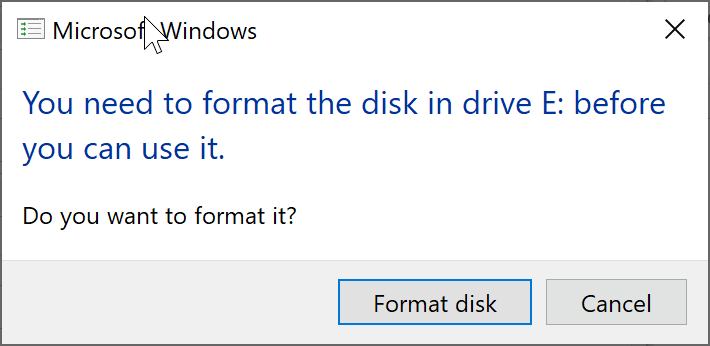
Inaccessible Bitlocker Drive: Windows does not even recognize it.
The following instructions are intended for tech-savvy users. Act cautiously, especially when using the low-level disk tool "DriveDoppel."
--rm : Automatically removes the container once you exit (keeps your system clean).
To actually use Modulus, you need to launch the container with GPU support enabled. Use the --gpus all flag to give the container access to your hardware.
This guide will walk you through how to , set up your environment, and get your first simulation running. Prerequisites
Downloading the Modulus Docker container is preferred over a manual pip installation for several reasons:
Most Modulus images are hosted on the NVIDIA GPU Cloud (NGC). Step 1: Log In to the NVIDIA Container Registry
Modulus requires specific versions of PyTorch and CUDA. The container guarantees they work together perfectly.
If you are working with Physics-Informed Neural Networks (PINNs) or AI-driven simulation, you are likely looking for NVIDIA Modulus. To ensure a stable environment with all dependencies pre-configured, using a Docker container is the industry-standard approach.
Once inside the container, you can verify that Modulus is ready by checking the installed version or running a basic example. python -c "import modulus; print(modulus.__version__)" Use code with caution.
Let us know if you have any questions about this article. Email to support@runtime.org.